
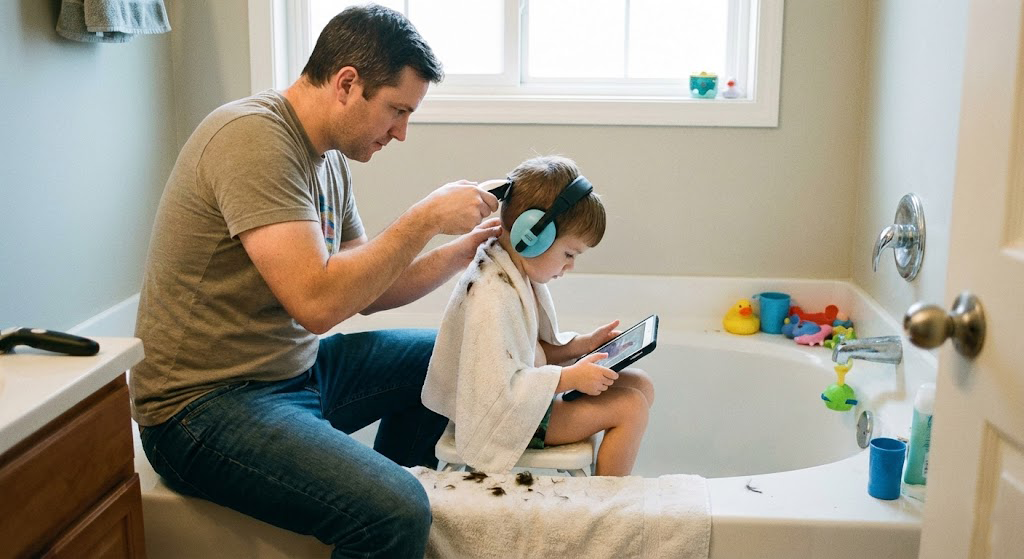

In the special needs parenting world, there is a very specific look I call “The Shaggy Dog.”
It’s that phase where your son’s hair is hanging in his eyes, curling over his ears, and starting to look a little neglected. You know it needs to be cut. Your spouse knows it needs to be cut. Even the grandma at the grocery store is giving you a look that says, “When are you going to trim that poor boy’s hair?”
But you are frozen. You are paralyzed by the memory of the last time you tried.
The screaming. The wrestling match in the booster seat. The 22-year-old stylist at the mall looking at you with a mix of horror and pity while other customers whispered. You left with a half-finished, choppy mess and a child who was upset for the rest of the day.
So, you wait. You let it grow. You tell yourself, “He looks cute with long hair.”
But eventually, the day comes. You can’t avoid it anymore.
For a neurodivergent child, a haircut isn’t just a grooming task. It is a sensory overload. If we don’t respect that, we lose before we even walk through the door.
We spent two years struggling with this before we realized we needed a better plan. We stopped treating it like an errand and started focusing on comfort and preparation.
Here is the guide on how to get a trim without the trauma.
Understanding the “Why”
To a neurotypical brain, a haircut is just annoying. To a neurodivergent brain, it can be physically painful. Understanding why they are screaming helps you fix it.
- The Itch: This is often the biggest trigger. The cape is tight and scratchy. The water spray feels cold. But the worst part is the clippings. Thousands of tiny, sharp hairs falling down the back of the neck feel like bugs crawling on their skin. It creates a panic response.
- The Noise: Professional clippers are loud. They vibrate at a frequency that can feel like a drill going directly into the skull, especially when they are right next to the ear.
- The Chair: The barber chair goes up. It goes down. It spins. For a child who is insecure about their balance, being lifted into the air by a stranger is terrifying.
- The Trust: You are asking them to sit still while a stranger holds sharp metal objects near their face. That requires a level of trust and impulse control that many of our kids just don’t have yet.
Once you realize they aren’t “being difficult,” but are actually overwhelmed, you change your approach.
Step 1: Finding the Right Barber
Do not just walk into a random chain salon on a busy Saturday morning. The fluorescent lights, the loud pop music, the waiting area… it’s too much before you even sit down.
You need to find the right person.
- Look for an Old-School Barber: In my experience, traditional barbers are often better than stylists for this. They use fewer tools, they work faster, and they have a calm energy. Stylists tend to fuss, spray water, and chat. You want speed and simplicity.
- Go in Alone First: Visit the shop by yourself. Ask the barber: “My son has sensory needs. He might get upset. He might need a break. Are you okay with that?” If they hesitate, find someone else. You need someone who says, “Yeah, I’ve seen it all. Bring him in.”
- Timing is Everything: Schedule your appointment for the quietest time possible. Tuesday mornings are usually dead. Sunday right at opening is great. If the shop is crowded or loud, we turn around and leave. The environment matters as much as the haircut.
Step 2: Practice at Home
You can’t expect your child to sit for 20 minutes without some practice.
- The Vibration Game: Buy a cheap electric toothbrush or a massager. Touch it to their arm. Then their shoulder. Then the back of their neck. Make it a game. “The buzzing bee is landing on your shoulder!” This helps them get used to the feeling of the clippers.
- The Cape: Practice wearing a towel or a cape at home while watching TV. The sensation of being restricted is panic-inducing for some kids. Let them get used to it in a safe zone.
- Watch Videos: Show them videos of other kids getting haircuts. YouTube is great for this. Narrate what is happening: “See? The barber uses the buzzer. The boy sits still. Then he gets a lollipop.”
Step 3: The “Comfort Kit”
The number one trigger for a meltdown is the itch. If a single hair goes down the back of his shirt, the session is over. We bring our own supplies to prevent this.
- The “Haircut Shirt”: We take his regular shirt off and put on a dedicated, tight-fitting undershirt. Immediately after the cut, we change him into a fresh, clean shirt. This ensures no hair touches his skin on the ride home.
- The Neck Towel: I bring a soft towel from home to wrap around his neck under the cape. The paper strips they use at the barber are scratchy. A soft towel creates a barrier that stops the hair from sliding down.
- The Tablet: This is the one time I want him completely distracted. The tablet goes in his lap, volume up (to drown out the clipping sound). Do not feel guilty about screen time here. It helps them cope.
Step 4: During the Haircut
You are there to advocate for your child.
- Face Away from the Mirror: Seeing scissors coming at their own head in the mirror is scary for some kids. We turn the chair around so he is facing the waiting area.
- Feel the Vibration First: Ask the barber to turn the clippers on and press the handle against your child’s hand or leg first. Let them feel the vibration before it touches their head. It removes the shock factor.
- Count it Down: Anxiety comes from not knowing when it will end. I hold his hand and say, “We are doing the back for 10 seconds. Count with me. 1… 2… 3…” Knowing it will end in 10 seconds makes it bearable.
- The Break Button: Give your child some control. Tell them, “If you need a break, raise your hand, and we stop immediately.” If they raise their hand, make the barber stop. This builds trust. They learn that they aren’t trapped.
Step 5: The Home Haircut (When All Else Fails)
Sometimes, the barbershop just isn’t happening. The sensory overload is too high. And that’s okay.
I bought a set of “Quiet” Clippers (marketed for sensory needs—they hum rather than buzz) and learned to do it myself.
My Rules for Home Cuts:
- Do it in the Bathtub: Have him sit in the dry bathtub in his swim trunks. It contains the mess perfectly.
- Wash Immediately: Do the cut. As soon as the last hair is snipped, turn on the shower. The itchy hair is washed away instantly. No “itchy neck” meltdown.
- Lower Your Standards: I am not a professional. I am not going to give him a perfect fade. I am going to get the hair out of his eyes. If it’s a little uneven, nobody cares. He is happy, safe, and loved. That looks better than a perfect haircut on an upset kid.
The Bottom Line
If your child is screaming, stop.
There is no haircut worth breaking their trust. If you only get the bangs done today, that’s a win. Come back next week for the sides. Or leave it shaggy for another month.
You aren’t training them for anything; you are just trying to help them. Take it slow. Bring the tablet. And buy yourself a reward for getting through it, too.