

There is a special kind of anxiety reserved for the night before a family road trip.
You aren’t worried about traffic. You aren’t worried about the hotel. You are worried about The Backseat.
For a neurodivergent child, a car is a sensory nightmare. They are strapped down (vestibular restriction). They are touching their sibling (tactile irritation). The sun is in their eyes (visual stress). And they are bored.
We used to dread the drive to Grandma’s house. It was 4 hours of screaming, kicking the driver’s seat, and throwing goldfish crackers.
But over the years, we’ve dialed in a system. We don’t just “hop in the car.” We prep the vehicle like we are going to Mars.
Here is how we survive the long haul without losing our minds.
1. The “Cockpit” Setup (Environment is Everything)
Before we even pull out of the driveway, I make sure the environment is controlled.
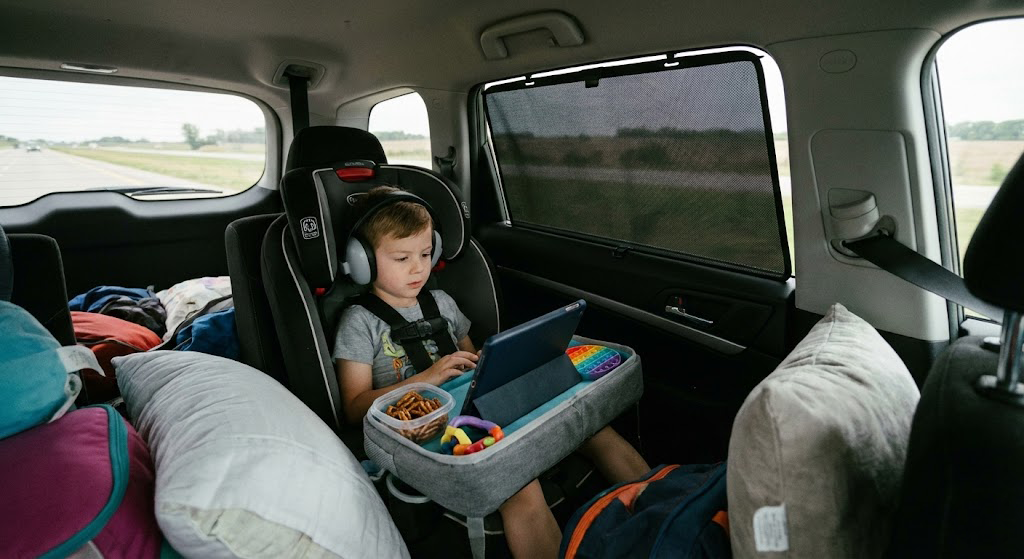
- Blackout Mode: Sun glare is a massive trigger for my son. We use those static-cling window shades on both rear windows. It keeps the car cooler and darker, which helps keep the energy level down.
- The “DMZ” (Demilitarized Zone): If you have more than one kid, they cannot touch. Period. We place a cooler or a pile of pillows in the middle seat. It acts as a physical barrier to prevent the “He’s touching me!” wars.
- The “Shoe-Free” Rule: We take shoes off immediately. It allows them to sit cross-legged or pull their knees up, which is more comfortable for kids with low muscle tone who get tired sitting upright for hours.
2. The “Drip Feed” Entertainment Strategy
The rookie mistake is handing them the iPad and a bag of toys at Mile 1. They will be bored by Mile 50.
We use the “Mile Marker” System.
I go to the dollar store before the trip and buy $10 worth of junk. Fidget spinners, sticker books, a new Hot Wheels car, a weird squishy ball. I wrap them in newspaper.
Every hour (or every 100 miles), they get one new thing to unwrap.
- It kills 15 minutes just opening it and exploring it.
- It gives them a dopamine hit to look forward to.
- It breaks the trip into manageable chunks. “We just have to make it to the next present.”
3. Snacks are Tools, Not Just Food
In the car, we don’t eat for hunger; we eat for regulation.
- Heavy Chewing: Beef jerky, licorice, or bagels. Chewing heavy/tough food is calming for the jaw and helps regulate the nervous system.
- Sucking: Lollipops or a water bottle with a high-resistance straw (like a CamelBak). The sucking motion helps pop their ears during elevation changes and calms anxiety.
- The “No-Sugar” Rule (mostly): We avoid high-sugar candy in the car. The sugar crash in a confined space is not something you want to deal with at 70 mph.
4. The “Heavy Work” Pit Stop
When we stop for gas, I don’t just let them walk to the bathroom and back. They need to burn off the adrenaline of sitting still.
We find a patch of grass at the rest stop and do 5 minutes of “Heavy Work”:
- Wall Pushes: Push against the brick wall of the rest stop building as hard as you can for 10 seconds.
- Jumping Jacks: Get the heart rate up.
- The “Race to the Tree”: Sprinting full speed.
It looks ridiculous. I don’t care. It resets their vestibular system and buys us another 2 hours of peace.
5. The Audio Shield
Sometimes, the visual stimulation of the highway (cars whizzing by) is too much.
We have a dedicated playlist of audiobooks and podcasts. Why audiobooks? Because it forces them to close their eyes and listen. It turns off the visual processing part of their brain.
If that fails, the Noise Canceling Headphones go on. Sometimes they don’t even play music; they just wear them to dampen the road noise and the sound of the engine.
The Bottom Line
There will still be moments where they scream. There will still be moments where you want to scream.
But preparation is the difference between a disaster and a memory.
Pack the snacks. Wrap the dollar store toys. Download the audiobooks. And remember: You are the captain of this ship. You can do this.