

“He is just a delight to have in class. So helpful. So quiet. We never have any issues.”
I sat across from the teacher, nodding and smiling, while my brain screamed: Are we talking about the same child?
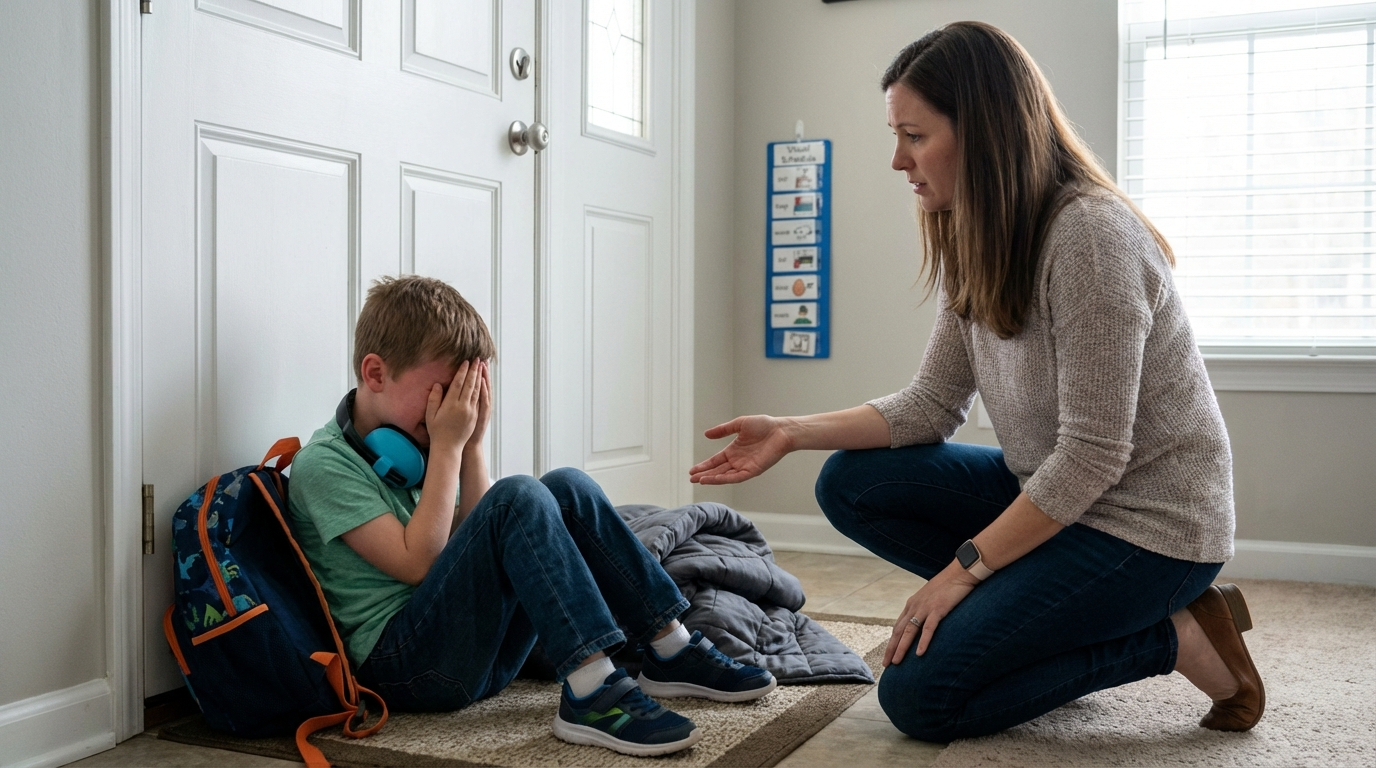
The kid she was describing sounded amazing. The kid I live with had screamed for 20 minutes that morning because his socks felt “spicy” and had thrown a boot at the dog.
For years, this dynamic made me feel like a failure. I thought, “If he can behave for her, the problem must be me. I must be too lenient, or too strict, or just a bad dad.”
If you are in that boat, let me throw you a lifeline: It is not you.
You are dealing with the After-School Collapse (also known as restraint collapse). It is real, it is exhausting, and it is actually a sign that you are doing something right.
The “Coke Bottle” Effect
Imagine your child is a bottle of soda.
- 8:00 AM: They get on the bus. It’s loud. The lights are bright. Shake the bottle.
- 10:00 AM: They have to sit still during math when their body wants to move. They have to filter out the AC humming and the kid tapping his pencil. Shake the bottle.
- 12:00 PM: The cafeteria. The social demands. The chaotic noise. Shake, shake, shake.
By 3:00 PM, that bottle is pressurized to the danger zone. But they hold it in. They “mask.” They use every ounce of energy to comply with the rules and not look different.
Then they walk through your front door. They are safe. They don’t have to hold it in anymore. They twist the cap off, and the explosion happens.
You Are the Safe Harbor
The collapse doesn’t happen because you are a bad disciplinarian. It happens because you are their safe person.
Their nervous system knows it can finally stop performing. They know you will love them even if they are a mess. It is a backhanded compliment, but it is a compliment. They are saving their hardest moments for the people they trust the most.
How We Handle the Crash Zone
Knowing why it happens helps, but it doesn’t make the 4:00 PM meltdown any easier to live with.
We stopped trying to do “normal after-school stuff” immediately. We created a Decompression Protocol:
- The “No-Questions” Rule: I don’t ask “How was your day?” or “Do you have homework?” immediately. Their brain is fried. I just say “Hi buddy” and hand him a snack.
- Sensory Reset: He goes straight to his room (his safe, low-sensory cave) for 20–30 minutes. He can watch a show, listen to an audiobook, or just lay under his weighted blanket. No demands.
- Hydration & Fuel: A regulated blood sugar level is the first line of defense against a meltdown. He gets water and a crunchy snack immediately.
Only after he has de-pressurized do we talk about homework or chores.
The Bottom Line
Don’t let the teacher’s report card make you doubt your own reality. They are seeing the performance; you are seeing the cost of that performance.
When they fall apart in your arms, it’s not a failure. It’s a release. Be the container for their chaos, and remember that the “angel” at school is only possible because they have a safe place to crash.